
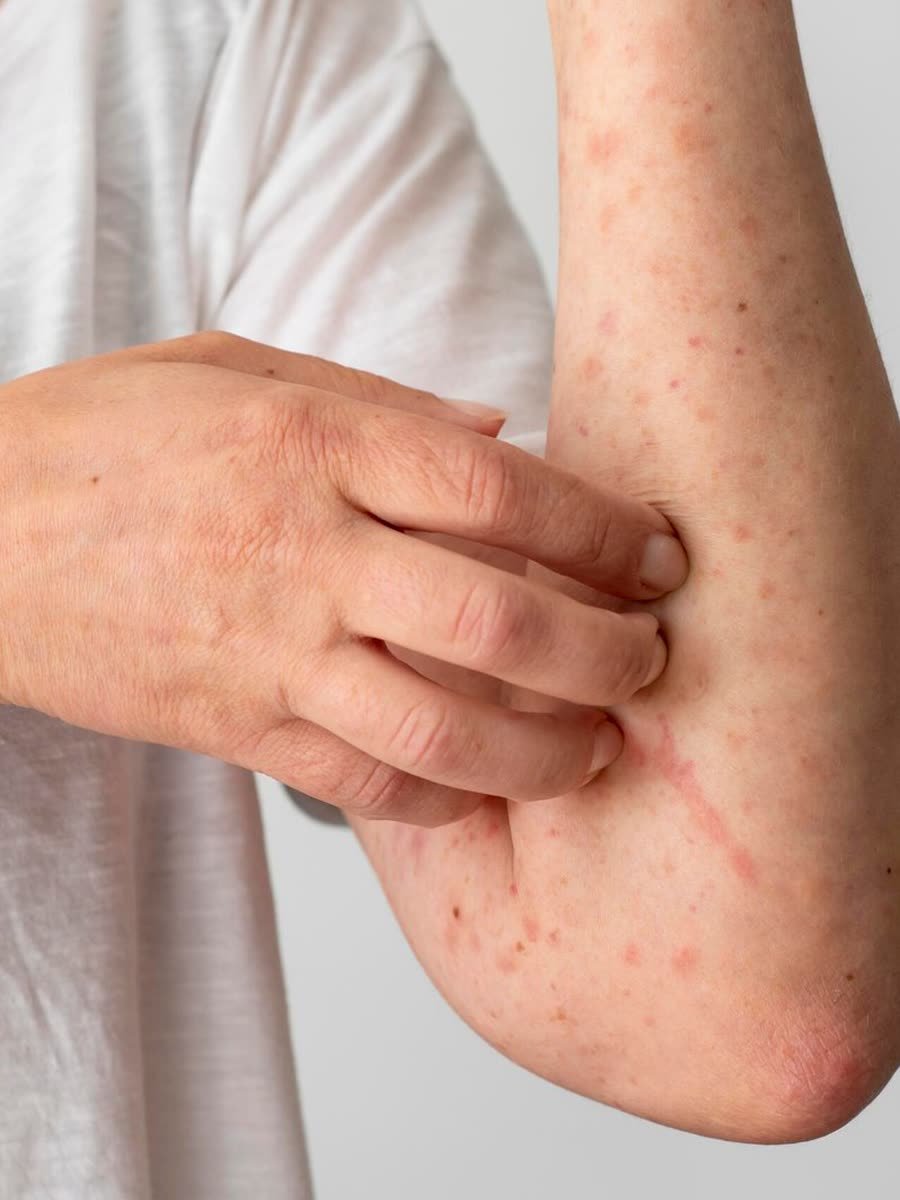
Atopic Dermatitis
Atopic dermatitis, also known as atopic eczema, is a chronic, inflammatory skin disease that affects millions of people around the world. It mainly affects children and tends to improve as they approach adolescence; however, some people live with flare-ups throughout their lives.
The condition can range from mild forms, with dryness, slight redness, and flaking, to severe cases that involve large areas of skin, cause persistent itching, and can progress to a secondary bacterial infection.
It is often associated with other allergic diseases, such as rhinitis and asthma, which reinforces the importance of specialized, ongoing dermatological follow-up.
How atopic dermatitis shows up
Symptoms vary from person to person, especially in intensity. The most frequent are:
Intense itching
The predominant symptom; it can be severe and lead to lesions from scratching.
Skin rashes
Red, inflamed patches, most common in the creases of the arms and legs.
Dry, flaky skin
Persistent dryness, with flaking even outside acute flare-ups.
Swelling and inflammation
The affected skin may swell and show visible signs of inflammation.
Skin lesions
Frequent scratching causes lesions that can become painful and infected.
Why atopic dermatitis happens
Atopic dermatitis is a complex, multifactorial condition. Its causes are not fully understood, but several factors contribute to its development:
- Genetics: the condition has a hereditary predisposition. If one or both parents are affected, the likelihood of their children developing the disease is higher.
- Skin barrier dysfunction: the skin of people with atopic dermatitis is often deficient in essential proteins that keep the protective barrier intact, which lets irritants and allergens in.
- Allergic reactions: allergies to foods, pollen, dust mites, and other allergens can trigger or worsen the symptoms.
- Environmental factors: exposure to dry environments, dust, and extreme temperatures can make the condition worse.
What can trigger flare-ups
Identifying and controlling the factors that bring on flare-ups is an essential part of treatment. The main triggers include:
Dust mites and dust
Common household allergens that irritate the sensitized skin barrier.
Allergenic foods
Milk, eggs, wheat, and seafood are examples that can make it worse in children.
Heat and sweat
High temperatures and heavy sweating increase itching and inflammation.
Irritating soaps and products
Formulas with fragrances, antiseptics, or glycerin can disrupt the skin’s pH.
Emotional stress
Tense situations can bring on or intensify flare-ups.
Synthetic fabrics
Clothes that do not breathe increase friction and sweating on inflamed skin.
Effective control is possible with the right follow-up
The goal of treatment is not only to act during flare-ups, but to build a care routine that reduces how often and how intensely they occur. The approaches used include:
- Continuous hydration: moisturizers made specifically for atopic skin, preferably therapeutic ones (with anti-inflammatory active ingredients or in a balm formula), fragrance-free. Moisturizer should be applied daily, including during periods without flare-ups.
- Syndet cleansers: they do not alter the skin’s pH during bathing. Your dermatologist can recommend the best options. Avoid antiseptic and glycerin soaps, unless advised otherwise by a physician.
- Topical corticosteroids: used during flare-ups to reduce inflammation and itching.
- Tacrolimus-based creams: topical immunomodulators indicated for sensitive areas or as an alternative to corticosteroids in prolonged treatment.
- Oral corticosteroids: reserved for more severe flare-ups, under medical supervision.
- Topical or oral antibiotics: indicated when the lesions have a secondary infection, especially one caused by scratching.
- Immunosuppressant medications (such as methotrexate and cyclosporine): in severe, refractory cases, they may be needed to control the immune response.
- Biologics (such as dupilumab): a significant advance in the treatment of moderate to severe atopic dermatitis, they control the disease in cases that did not respond to conventional therapies.
- Avoiding allergens: identifying and removing the triggers is a fundamental measure to reduce how often flare-ups occur.
Habits that make a difference every day
Small changes to your routine help protect the skin barrier and prevent new flare-ups:
Short, lukewarm showers
Avoid hot water and long showers, which dry out atopic skin even more.
One shower a day
Too many showers compromise the skin barrier. A single daily shower is recommended.
Cotton clothing
Natural, breathable fabrics reduce friction and irritation on sensitive skin.
Short nails
Trimmed nails lower the risk of lesions and infections caused by scratching.
Moisturizer everywhere
For children: send moisturizer to school and to relatives’ homes, because the routine cannot be interrupted.
Regular follow-up
Atopic dermatitis is chronic. Periodic consultations with a dermatologist are essential to adjust the treatment.
Moderate to severe cases: treatment has changed
Dr. Murilo Drummond explains the cycle that keeps the disease going: the skin itches, the person scratches, this injures the skin and inflames it even more, and the itching returns; in some cases the skin can even become infected. Breaking this cycle is part of the treatment. During flare-ups, in addition to topical anti-inflammatories, medications such as tacrolimus or pimecrolimus may be used on the most sensitive areas, always according to age, body area, and the intensity of the lesions.
And here is the news many people still do not know: in moderate to severe cases, when the itching is intense, the lesions are extensive, or quality of life is compromised, there are now treatments that have changed how the disease is controlled, such as immunosuppressants (methotrexate, cyclosporine), JAK inhibitors, and biologics (dupilumab). Each one has a specific indication and requires a medical evaluation, tests, and follow-up. It is not a matter of choosing a cream or medication on your own: the path is not to switch products with every flare-up, but to have an individualized care plan, designed for your skin, your age, and the stage of the disease.
Common questions
Can atopic dermatitis be cured?
There is no magic cure, but there is control, and very good control when the treatment is done well.
Why does the itching seem to never stop?
Because it becomes a cycle: scratching injures the skin, the injury inflames it, and the inflammation makes it itch again. Breaking this cycle is a central part of treatment.
Is atopic dermatitis only a childhood condition?
It is more common in children and may improve over the years, but some people continue to have flare-ups in adolescence and adulthood.
Is there treatment for severe cases?
Yes. Immunosuppressants, JAK inhibitors, and biologics have changed how the disease is controlled. The indication requires an evaluation, tests, and follow-up.
Can I choose a cream on my own?
It is not recommended: the choice depends on age, body area, and the stage of the disease. The plan is individualized.
How to control itching that will not go away
In the video, Dr. Murilo Drummond explains what atopic dermatitis is, why the itching becomes a self-perpetuating cycle, and what the pillars of treatment are: restoring the skin barrier, identifying triggers, and controlling inflammation during flare-ups.
Atopic dermatitis treatment in Barra da Tijuca and Ipanema
Atopic dermatitis treatment is available at both Drummond Dermato locations in Rio de Janeiro. In Barra da Tijuca, the clinic is at Av. das Américas, 3200, sala 112. In Ipanema, at Rua Visconde de Pirajá, 540, sala 314. At both, the treatment is performed by dermatologists from our team, after a consultation that evaluates the skin and defines the protocol.
Where to get atopic dermatitis treatment in Rio de Janeiro?
At Drummond Dermato, in Barra da Tijuca or Ipanema. Book your consultation via WhatsApp and choose the location closest to you.
Live better in the skin you have
Although there is no definitive cure, proper management of atopic dermatitis transforms quality of life. Book a consultation with our dermatology team in Ipanema or Barra da Tijuca.
Book via WhatsApp