
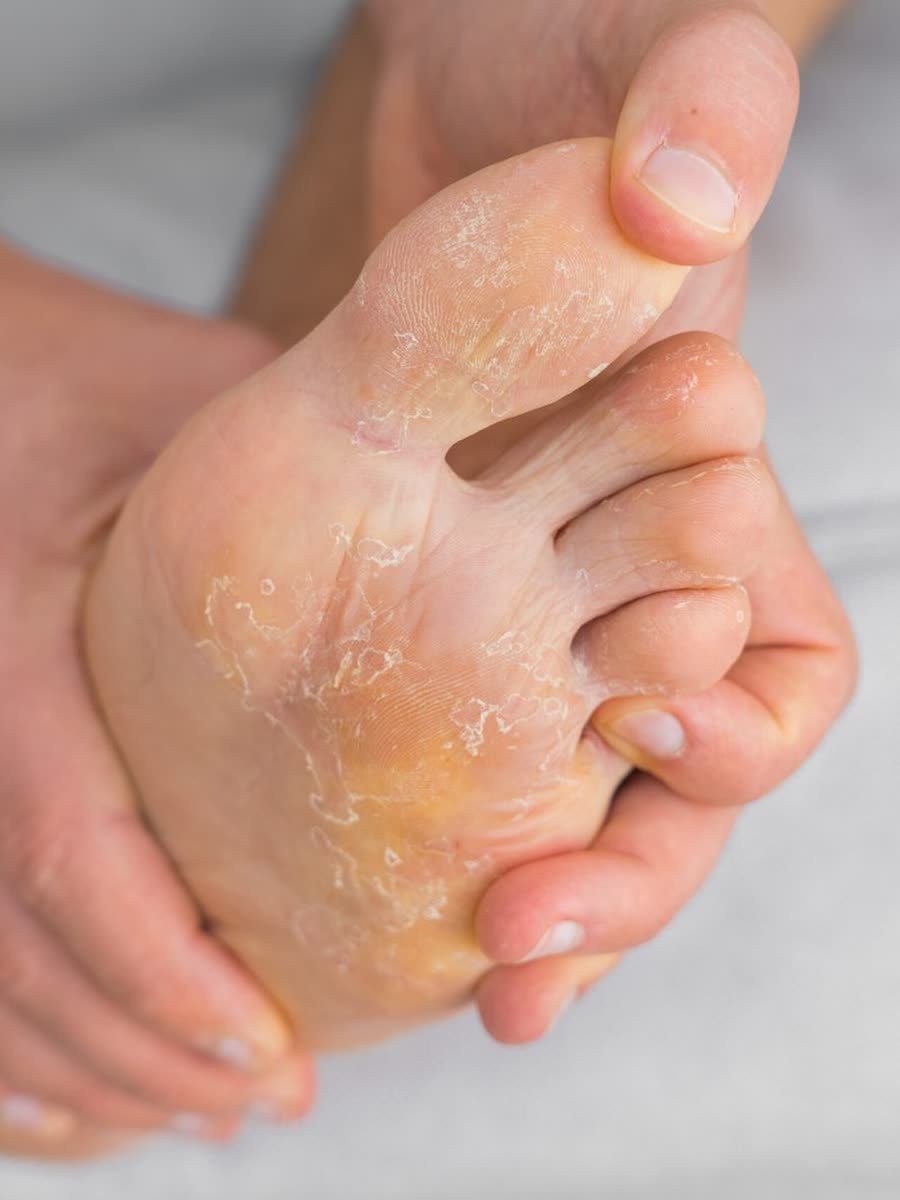
Palmoplantar Dyshidrosis
Palmoplantar dyshidrosis, also known as dyshidrotic eczema, is a skin condition characterized by small blisters and intense itching on the palms of the hands and the soles of the feet, especially along the sides of the fingers and toes.
It is a specific form of eczema (dermatitis) that affects the areas with the highest concentration of sweat glands. Although it is not serious in most cases, the discomfort and itching can significantly affect quality of life, and an accurate diagnosis by a dermatologist is essential for effective treatment.
How dyshidrosis shows up
Characteristic blisters
Small blisters filled with clear fluid, which can vary in size and appear mainly on the palms and along the sides of the fingers.
Intense itching
Pruritus that can range from mild to very intense, often coming before the blisters appear.
Redness and flaking
The affected skin may turn red and flake as the blisters dry out and the skin regenerates.
Sores and cracks
In more severe cases, constant scratching can break the skin, creating sores and cracks that increase the risk of infection.
What can trigger flare-ups
Allergies
Allergic reactions to metals (such as nickel) or to other contact allergens are factors often associated with the condition.
Stress
Periods of emotional tension can bring on or worsen flare-ups in people who are predisposed.
Chemical irritants
Exposure to detergents, soaps, and harsh cleaning products is a common everyday trigger.
Hot, humid weather
Excessive heat and humidity increase sweating and can encourage blisters to appear.
Genetic predisposition
A family history of eczema or atopy increases susceptibility to palmoplantar dyshidrosis.
Secondary infections
When scratching breaks the skin, bacteria can enter and cause infections that require specific treatment.
Controlling flare-ups and ongoing care
The goal of treatment is to relieve itching, reduce blisters, and prevent infections. The dermatologist always tailors the protocol to the severity and frequency of the flare-ups.
Wet compresses
Applied to the affected areas to relieve pruritus and soothe the blisters in the acute phase.
Topical corticosteroids
Creams and ointments prescribed by the dermatologist to control inflammation and speed up the clearing of lesions.
Antihistamines
Medications that reduce itching, improving comfort and sleep quality during flare-ups.
UV phototherapy
In persistent or severe cases, ultraviolet light therapy may be indicated as a second-line treatment.
Topical immunosuppressants
An alternative to corticosteroids on sensitive areas or when prolonged use of steroids is contraindicated.
Hydration and protection
Keeping hands and feet well moisturized, wearing protective gloves, and avoiding contact with irritants are essential prevention measures.
Dyshidrosis treatment in Barra da Tijuca and Ipanema
Dyshidrosis treatment is available at both Drummond Dermato locations in Rio de Janeiro. In Barra da Tijuca, the clinic is at Av. das Américas, 3200, sala 112. In Ipanema, at Rua Visconde de Pirajá, 540, sala 314. At both, the treatment is performed by dermatologists from our team, after a consultation that evaluates the skin and defines the protocol.
Where to get dyshidrosis treatment in Rio de Janeiro?
At Drummond Dermato, in Barra da Tijuca or Ipanema. Book your consultation via WhatsApp and choose the location closest to you.
Care for your skin with people who understand it
Accurate diagnosis and personalized treatment in Ipanema or Barra da Tijuca.
Book via WhatsApp