
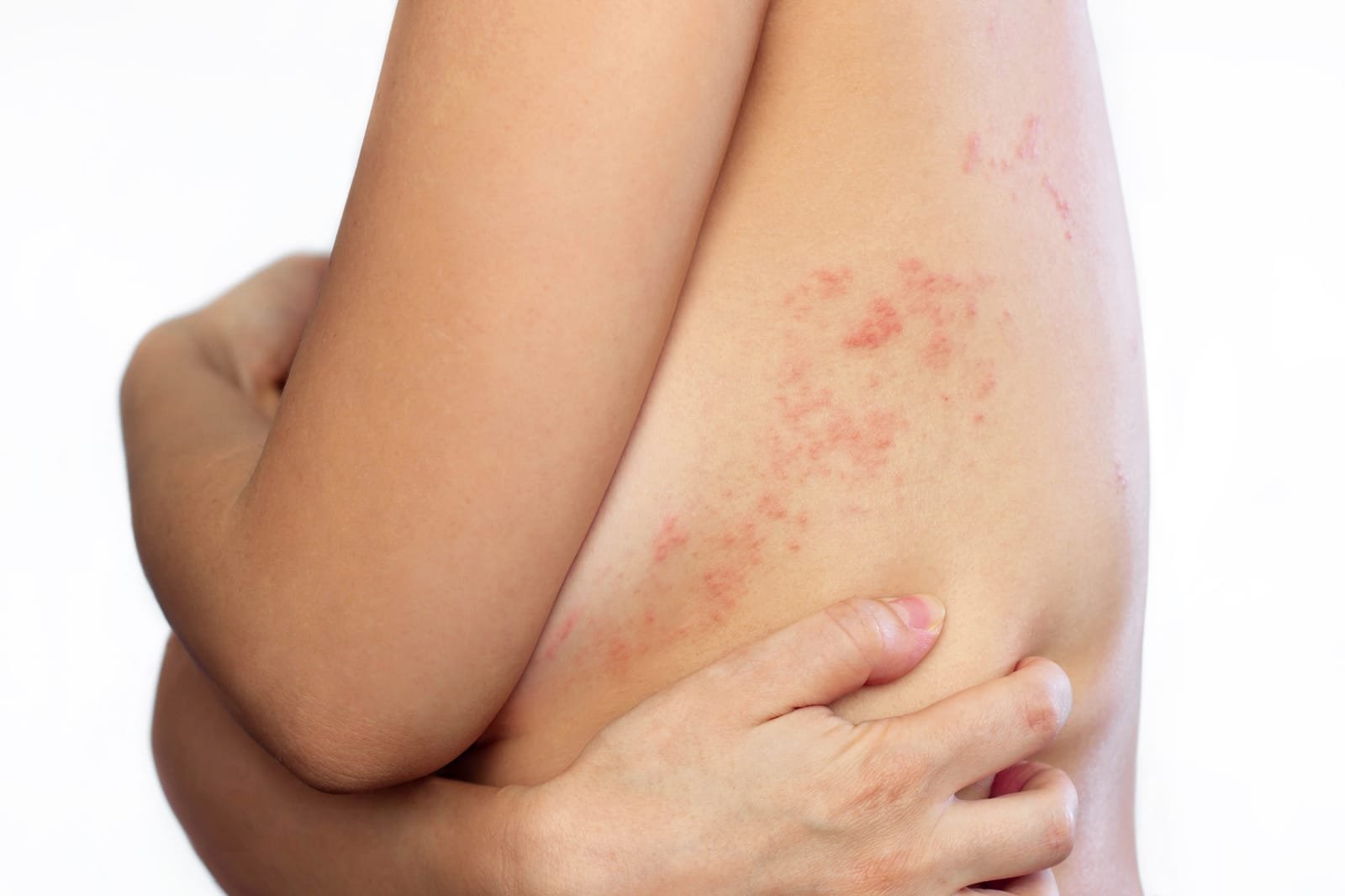
Shingles
Shingles (herpes zoster) is caused by the same virus as chickenpox. After the infection, this virus does not go away: it lies dormant in the nerves and can be reactivated many years later, especially with aging or when immunity drops. That is when the painful blisters appear, usually on only one side of the body, following the path of the nerve.
The blisters disappear and the skin heals, but in some people the pain continues for months. This complication has a name, postherpetic neuralgia, and it is a complaint we hear often in the office. That is why care starts in the first days of the outbreak, not only when the blisters appear.
A disease of the skin and the nerve
Shingles does not affect only the skin. It also causes inflammation and can damage the nerve, which is what explains the pain, during the outbreak and, in some cases, after it. It is not the same as the sore that keeps coming back at the corner of the lip: that one is caused by a different virus, herpes simplex, and calls for its own care, which we explain in our guide to herpes simplex.
Signs that deserve attention
Painful blisters
Usually on only one side of the body, following the path of a nerve.
Burning sensation
A burning feeling in the area, which can continue after the skin heals.
Electric shocks and stabbing pain
Shock-like or stabbing pain in the area, a sign that the nerve is involved.
Pain at the touch of clothing
Some people feel intense pain from the mere touch of clothing on the skin.
Why you should seek care right away
Antiviral treatment should start as early as possible, ideally within the first 72 hours. The sooner the physician evaluates the condition, the sooner it is possible to treat the infection and care for the nerve inflammation. This care is part of medical dermatology.
When the pain continues after shingles
In some people, even after the lesions heal, the nerve keeps transmitting abnormal pain signals. It can feel like burning, electric shocks, or stabbing pain, and it can last for months or even years. The older the person, the greater the risk of this complication.
There are specific medications for this type of pain, which is neuropathic, as well as topical treatments, always with a prescription and medical follow-up. We can combine them with a complementary strategy: photobiomodulation.
How we treat shingles
The plan is always defined in the consultation, according to the stage of the disease and the intensity of the pain, and it may include:
Antiviral
It is the treatment for the infection and should start as soon as possible, ideally within the first 72 hours.
Pain treatment
Specific medications for neuropathic pain and topical treatments, with a medical prescription.
Photobiomodulation
With MarcCo, a handpiece of the Fotona laser: the light stimulates cell responses without destroying tissue, as a complement in controlling inflammation and pain.
Photobiomodulation has been studied for its ability to modulate inflammatory processes and mechanisms involved in neuropathic pain. A review published in 2026 brought together studies on the use of low-level lasers in postherpetic neuralgia, and the clinical results analyzed were promising, with a reduction in pain intensity in the patients treated. Experimental studies also suggest that light may act on nerve inflammation and on mechanisms linked to nerve recovery. Larger clinical studies are still needed to confirm its efficacy and define the best protocols, which is why we treat photobiomodulation as a complement, without replacing the antiviral or conventional pain treatment.
Is it worth starting photobiomodulation during the outbreak?
A retrospective study of 250 patients, published in 2016 in the Journal of the American Academy of Dermatology, compared three groups: those who received laser treatment in the first five days of shingles, those who started later, and those who did not receive the treatment. The patients treated early had a lower incidence of postherpetic neuralgia during follow-up of up to six months.
The result raises a possibility: treating the nerve inflammation from the start may help reduce the risk of the pain becoming persistent. During the outbreak, this never replaces the antiviral, which should be started as soon as possible. The indication is defined case by case, in the consultation.
The shingles vaccine
More important than treating shingles is trying to prevent it from happening. The vaccine available today is more than 90% effective in preventing the disease and protects almost completely against postherpetic neuralgia. It is given in two doses, and even people who have already had shingles may be candidates for vaccination.
In Brazil, it is recommended for adults aged 50 and over and for certain groups of immunocompromised people aged 18 and over. If you are in one of these groups, talk to your physician about the vaccine.
Common questions
Does the pain after shingles go away on its own?
Not always. In some people, the pain continues for months or even years after the skin heals. That is why it is worth seeing a physician from the start of the outbreak, rather than waiting for the pain to become chronic.
Does photobiomodulation replace the antiviral?
No. The antiviral is the treatment for the infection and should start as soon as possible. Photobiomodulation comes in as a complement, to help control nerve inflammation and pain.
Can people who have already had shingles get the vaccine?
They may be candidates, yes. It is worth talking to your physician about your case.
Are shingles and herpes simplex the same thing?
No. Shingles comes from the chickenpox virus and usually appears on only one side of the body, following the path of a nerve. Herpes simplex is caused by a different virus and usually comes back in the same place, such as the corner of the lip.
Shingles treatment in Barra da Tijuca and Ipanema
Shingles treatment is available at both Drummond Dermato locations in Rio de Janeiro. In Barra da Tijuca, the clinic is at Av. das Américas, 3200, sala 112. In Ipanema, at Rua Visconde de Pirajá, 540, sala 314. At both, care is provided by dermatologists from our team, after a consultation that evaluates the condition and defines the treatment.
Where to get shingles treatment in Rio de Janeiro?
At Drummond Dermato, in Barra da Tijuca or Ipanema. Book your consultation via WhatsApp and choose the location closest to you.
Pain deserves attention from the start
Consultation with a dermatologist in Ipanema or Barra da Tijuca, during the outbreak or if the pain has continued since.
Book via WhatsApp